2026
2 ~ 3 April, 2026
Please attach the contents below as an email body and send it to zer0con adm @ gmail.com.
########## Zer0Con Call For Paper ###########
Name(@handle):
Affiliation
Topic title
Topic keywords
Abstract
Speaker information
Previously presented/published?
Includes exploitation demo?
#############################################
For more information about CFP, see below.
Zer0con is dedicated to the identify, analysis, and exploit of vulnerabilities in various environments. This includes the exploitation of web browsers, operating system kernels, mobile platforms, AI systems, security products, Internet of Things (IoT) devices, and the pursuit of bug hunting within these domains.
If you have any questions, feel free to mail to [zer0conadm (at) gmail.com].
Please attach the contents below as an email body and send it to zer0con adm @ gmail.com.
########## Zer0Con Call For Training ###########
Name(@handle):
Affiliation:
Course title:
Course keywords:
Previously delivered at other events or organizations?:
Abstract & Trainer information (PDF attachment)
#############################################
For more information about CFT, see below.
Zer0Con Training aims to provide an educational experience focused on identifying, analyzing, and exploiting vulnerabilities in influential software such as operating system kernels, browsers, and more. We do not limit the scope of target software, so if you have a valuable training program to propose, we welcome your submission.
If you have any questions, feel free to mail to [zer0conadm (at) gmail.com].
About
SPEAKERS

Abstract
We will begin by exploring newly discovered 0-click attack surfaces across Android, Samsung, and various Android messengers. First we will walk through the steps required to chain various logic bugs to reach DNG and other image format attack surfaces on Samsung/Android. We will then examine the brief history of logic bugs in these areas, including a few that we discovered and reported to vendors. Next, we will discuss the methodologies we used to discover 16+ vulnerabilities in well trodden image format decoders QuramDNG, QuramJPEG, and DNG-SDK. Finally, we will briefly cover exploitation challenges and methodologies in these areas.
Brief biography
Brendon Tiszka
Google Project Zero
Brendon Tiszka is a security researcher on Google's Project Zero team, which aims to reduce harm caused by targeted attacks on the Internet. During his career he has mostly focused on Chrome renderer remote code execution vulnerabilities and sandbox escapes. His current research focus is applying the vulnerability research methodologies he used during Chrome Research to discover vulnerabilities in ubiquitous image decoders such as DNG.
Abstract
Android’s GPU drivers have long been a prime target for attackers — not only due to their historically inconsistent code quality and the powerful primitives their vulnerabilities often expose, but also because they are accessible by default to any untrusted app. In this talk, I will share how I discovered and successfully exploited two Mali GPU vulnerabilities on the Pixel 8a.
I will start with an overview of common Android attack surfaces and prior research, followed by practical techniques for debugging the Android kernel without relying on kgdb. I will then detail the root causes of two vulnerabilities and focus on the exploitation process of one of them, including several uncommon or even novel techniques, such as achieving arbitrary function calls under CFI constraints and using a more elegant approach to bypass SELinux. Finally, I will demonstrate the exploit on a Pixel 8a, obtaining a full root shell.
Brief biography

Chih-Yen Chang (@u1f383)
DEVCORE
Chih-Yen Chang, aka Pumpkin, is a security researcher at DEVCORE. His work primarily focuses on Linux kernel, Android and hypervisor security. He is an active kernelCTF player and a multiple-time Pwn2Own participant, where he has successfully compromised targets including Synology NAS, Ubuntu, and RHEL. He recently participated in the zeroday.cloud competition, achieving a successful exploit on the latest Ubuntu Server. He has spoken at conferences such as POC, Hexacon, and HITCON.
Abstract
In the 80s we used to have those mixtapes, where we recorded our favorite songs from various places. Also back in the day, hacking was "easy", buffer overflows were all around, and security in general was still in its very early stages.
In this talk we bring together some of our favorite macOS "Singles", those vulnerabilities that were never released on a themed album (talk). They are often lame simple, bringing vibes of the 80s, but some of them were quite complex giving us modern day challenges.
On the A side of the tape we will listen to Csaba's selection of exploits. We will discuss some AMFI downgrade attacks, were we could simply exploit old vulnerabilities by reintroducing them to the system. Then will divert to exploiting an XPC service in the Compressor app, which was written with anything but security in mind.
Staying with the "Were the developers out of their mind?" theme we will see how we could easily delete SIP protected files, and disable services like XProtect. Finally we will dive into a more complex vulnerability in storagekitd, where we could win a very tiny race and by that fully bypass TCC on the system or simply delete arbitrary SIP protected files.
Now we open the player, flip the tape and listen to Gergely's selection on the B side.
On the B side, I will talk about some of my yet to be discussed bugs. To get things started we'll look at two trivial - yet serious - bugs that should
make any vendor blush. One of these is a trivial LPE introduced by a new feature, the other is a hilarious oversight in XProtectRemediator. To get a
little more serious technically we will dive into "jetson", an older - but not yet publicly discussed - bug of mine that allowed to fully bypass TCC.
Then comes a newer item from the selection: I will discuss "homeinvasion", a bug in a core macOS feature that only recently got fixed. The bypass for this is still a 0day. Finally I will talk about another rather trivial bug in diskarbitrationd to demonstrate how miniscule mistakes can lead to catastrophe when you're running as root.
Brief biography
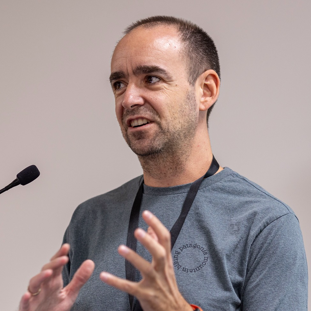
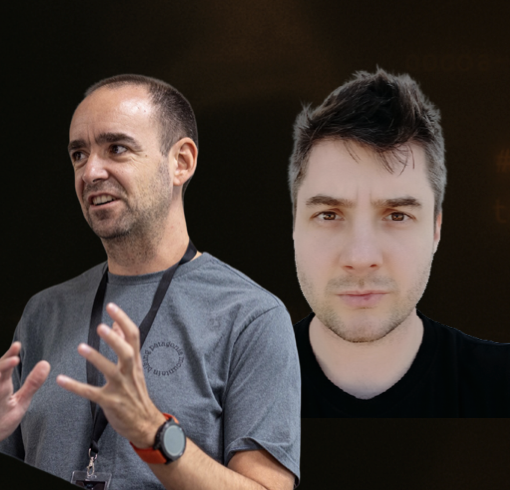
Csaba Fitzl (@theevilbit)
Iru
Csaba is a Principal macOS Security Researcher working at Iru, focusing on vulnerability research and EDR detection development. He currently has over 100 CVEs issued by Apple for vulnerabilities ranging from simple info leaks to full macOS exploit chains bypassing all security controls. He frequently presents his findings on conferences, like BlackHat, Objective By The Sea, POC, and many others. Prior Iru Csaba worked for OffSec developing the EXP-312 training about macOS exploitation.
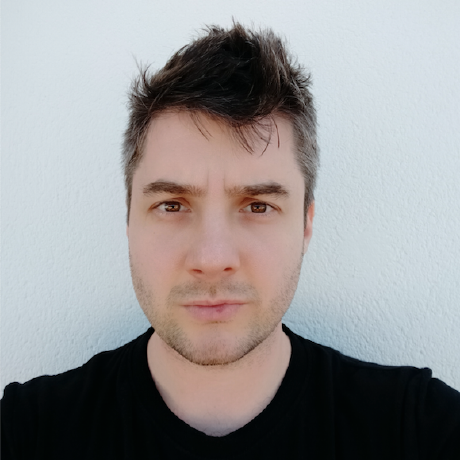
Gergely Kalman (@gergely_kalman)
Security Researcher
Gergely is a independent security researcher working mainly on the Apple Security Bounty program, with a research focus on logic vulnerabilities. He has presented his findings at OBTSv6, and blogs at gergelykalman.com So far he has found multiple user to root LPEs, multiple TCC bypasses, an app sandbox escape, along with other bugs. He enjoys trying to exploit the unexploitable, as evidenced by multiple bugs of his that were hiding in plain sight for years or in one case, for decades.
Abstract
For over a decade the Pwn2Own playbook has relied on manual reversing and exploit development with limited automation supporting the workflow. However with chainable bugs increasingly disclosed through bug bounties, viable contest vulnerabilities are becoming scarce. We needed scale without the noise of traditional static analysis tools.
Last year we rebuilt our workflow around an agentic AI system for vulnerability research on Android. The high-fidelity decompilation of Android applications recovers structured, readable code, making them ideal for LLM-powered analysis. Furthermore, the bugs we typically target share distinct code patterns that can be tedious to uncover manually, yet naturally align with LLM strengths in pattern recognition. Leaning into this, we built a pipeline of agents to automate the bug-hunting process end to end. The system analyses the attack surface, identifies candidate issues, verifies findings, and generates exploit triggers. When promising bugs are discovered, it can automatically deploy a proof-of-concept to a physical device and produce a proof-of-vulnerability with minimal human interaction.
The workflow uncovered more than a dozen vulnerabilities, including issues in Samsung's AI assistant Bixby, two of which we chained for a successful Pwn2Own entry. In this talk, we present the system architecture, key challenges, and lessons learned from using LLMs in offensive vulnerability research.
Brief biography


Abstract
Microsoft is rolling out their replacement for User Account Control (UAC) to Windows 11 25H2 in the form of Administrator Protection. The goal of this feature is to have all the benefits of UAC but without that pesky lack of a security boundary.
This presentation is about my research into this new feature, its implementation strengths and weaknesses and how I managed to find 9 different ways to get administrator privileges by bypassing the protection. I'll also discuss some related features that have been around since Vista which allowed me to steal your local credentials, hijack protected processes and elevate to SYSTEM.
Brief biography

James Forshaw (@tiraniddo)
Google Project Zero
James is a security researcher in Google’s Project Zero. He has been involved with computer hardware and software security for over 10 years looking at a range of different platforms and applications. With a great interest in logical vulnerabilities he’s been listed as the #1 researcher for MSRC, as well as being a Pwn2Own and Microsoft Mitigation Bypass bounty winner. He has spoken at a number of security conferences including Black Hat USA, CanSecWest, Bluehat, HITB, and Infiltrate. He’s also the author of two security books “Windows Security Internals” and “Attacking Network Protocols”, both available from NoStarch Press.
Abstract
Against the backdrop of the rising interest in AI security and Web3 security, an increasing number of researchers are shifting their focus to these emerging fields. But as the foundation of internet security, does Web security still hold untapped potential for new discoveries?
Through extensive and in-depth research, I discovered a type of component that has long been overlooked but is widely present across various systems. It plays a central role in modern application architectures, yet is riddled with design and implementation flaws. Once exploited, these vulnerabilities can lead to serious consequences such as privilege escalation, data leakage, and service manipulation.
In this talk, I will take you back to this “forgotten corner” of the system, uncover the hidden security risks behind it, and demonstrate real-world examples of how these vulnerabilities have been exploited in enterprise and cloud vendor environments. Finally, I will discuss how to better identify, defend against, and mitigate these threats through architectural design and security best practices.
Brief biography

Ji'an Zhou (@azraelxuemo)
Security Researcher
He is an independent security researcher. He mainly focuses on Java security, web security, cloud security and AI security.His work has helped many high-profile vendors improve their product security, including Google, Cloudera, IBM, Microsoft, Oracle, AMD, OpenAI and PayPal.
Abstract
After the disclosure of CVE-2025-55182 ("React2Shell") last year, a wave of deserialization vulnerabilities has hit some of the most popular full-stack frameworks. Within a week of React2Shell's initial publication, more than a billion attack attempts were recorded against millions of React apps, shining a light on significant attack surface hidden in plain sight.
But deserialization bugs are only the tip of the iceberg - many other "features" of modern frameworks have quietly shifted trust boundaries and security assumptions in application development.
This presentation explores novel exploit techniques targeting server-side JavaScript that were never possible with simple frontends and JSON APIs. Through live exploit chains, we'll examine how authentication flaws, injection vulnerabilities, DoS, and, of course, RCE can slip through the cracks of web security research. Attendees will leave with a clear understanding of the primitives used to build these exploits and how to weaponize them.
Brief biography

Lachlan Davidson
Carapace
Best known for discovering CVE-2025-55182 ("React2Shell"), Lachlan Davidson is an experienced penetration tester and security researcher. In his role as the Security Innovation Lead at Carapace in New Zealand, he's responsible for designing and delivering cutting-edge security assessments, with a particular interest in hacking any systems that are bespoke or unusual.
Abstract
In this talk, we present a practical, end-to-end attack chain against modern
fiber access networks, demonstrating how multiple pre-authenticated Remote Code
Execution (RCE) vulnerabilities can be chained to fully compromise an ISP
infrastructure.
We begin by exploiting three pre-authenticated RCE vulnerabilities on a GPON
Optical Line Terminal (OLT), gaining initial access to a device that sits at a
critical point of ISP networks and directly handles customer traffic. From
the compromised OLT, we pivot into the ISP’s cloud-based fleet management
platform via an additional pre-authenticated RCE, ultimately obtaining
centralized and persistent control over all deployed OLTs managed by the
provider.
In large-scale deployments, OLTs are remotely administered through centralized
management platforms, making them highly attractive targets. By chaining
vulnerabilities between exposed edge devices and their associated cloud
management systems, an attacker can escalate from a single-device compromise to
full control over the access network infrastructure.
This attack path enables high-impact outcomes, including large-scale service
disruption, long-term unauthorized access to ISP networks, customer traffic
interception, and mass surveillance capabilities. These scenarios closely mirror
recent real-world disclosures involving nation-state actors covertly
compromising telecommunications providers in Western countries, where control
over ISP infrastructure has been leveraged for strategic intelligence collection
and population-scale monitoring.
For responsible disclosure reasons, the vulnerabilities and technical details
presented are currently being disclosed to the affected vendor. Specific exploit
details will be shared only at the conference. A demonstration video showcasing
the complete attack chain and its real-world impact is provided to support this
submission.
Brief biography

Mathieu Farrell (@Coiffeur0x90)
Quarkslab
Mathieu Farrell is a member of Quarkslab’s Adversary Simulation Team. He focuses on vulnerability research and exploit development, with particular expertise in identifying and leveraging initial access vectors in real world attack scenarios.
Abstract
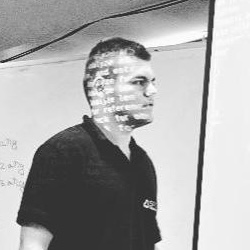
This talk will be about how I managed to leverage claude to generate a linux kernel infoleak exploit and how I leveraged that to achive cross cointer infoleak.
We will begin by exploring the prerequisit subsystem in order to have a better grasp of the underlying systems needed in order to build the exploit. Afterwards we'll dive in the root cause analysis of the underlying issue.
Next we'll go over building the vulnerable endivonment and the necessary foundational blocks for final exploit. Precisly we'll walk through the steps required to reach the infoleak and what mitigations stopped us from getting there.
Afterwards we will explore the final version of the exploit which allowed us to leak database information from postgresql which was running in docker from the host. We'll embark onto the next destionation that one being a new method of hugepage spray.
Finall we'll talk about my short detour on KCTF journey and the reasons why we failed to exploit the instance.
Brief biography
Vatafu Vladut (@f00fc7c800)
Security Researcher
Vatafu Vladut is an indepedent security researcher. He's part of execc0de team, where he and hi's friend publish research on memory corruption bugs such as their nday research on CVE-2018-0834,CVE-2021-3345,TALOS-2024-1989. He's holder of OSEE and OSED certificates and the organizer for pwnctf.ro CTF
Abstract
While there are some high-quality public research on Apple's GPU, analysis of Apple's Display Co-Processor (DCP) remains scarce—even though it is frequently targeted by hackers (e.g., fake Carrier.app ITW exploit, Tianfu Cup iPhone jailbreak, etc). Based on my research on DCP, I obtained 14 related CVEs by far, in this talk, I will revisit the discovery process behind these vulnerabilities from an attacker’s perspective, including attack surface analysis, firmware reverse engineering approaches, fuzzing methods, details of arbitrary code execution exploit on DCP, and Apple's patches and new mitigations. I hope my talk will provide some inspiration for security research in related fields.
Brief biography

Ye Zhang (@VAR10CK)
Baidu
Security researcher focusing primarily on Linux and Apple platform security. 2024 Matrix Cup Ubuntu LPE. 2024 Samsung Mobile Hall of Fame top 8.
SCHEDULE
| TIME | SPEAKER | TITLE |
|---|---|---|
| 09:00 ~ 09:30 | Registration | |
| 09:30 ~ 10:00 | Welcome & Introduction | |
| 10:00 ~ 11:00 | Lachlan Davidson | Discovering React2Shell and Unleashing the New Age of JavaScript Exploits |
| 11:00 ~ 11:30 | Break Time | |
| 11:30 ~ 12:30 | Chih-Yen Chang | Modern Android Kernel Exploitation Through a Mali Driver Vulnerability |
| 12:30 ~ 14:00 | Lunch | |
| 14:00 ~ 15:00 | Csaba Fitzl & Gergely Kalman | macOS Exploit Mixtape – Hack Like it's the 80s |
| 15:00 ~ 15:30 | Break Time | |
| 15:30 ~ 16:30 | Vatafu Vladut | From inside with love: using uninitialized kernel memory to achieve cross container infoleak |
| 16:30 ~ 17:00 | Break Time | |
| 17:00 ~ 18:00 | Mathieu Farrell | Breaking the Backbone of Global ISP Networks |
| TIME | SPEAKER | TITLE |
|---|---|---|
| 09:30 ~ 10:00 | Introduction & Warm Up | |
| 10:00 ~ 11:00 | Anonymous Researcher | Web Security Still Has Secrets — And They're Dangerous |
| 11:00 ~ 12:00 | Brendon Tiszka | Researcher's Guide to the Galaxy: Digging into Samsung 0-click, Android Messengers, DNG, and other image formats |
| 12:00 ~ 14:00 | Lunch | |
| 14:00 ~ 15:00 | Georgi Geshev & Ben R | Promp2Pwn – LLMs Winning at Pwn2Own |
| 15:00 ~ 15:30 | Break Time | |
| 15:30 ~ 16:30 | Ye Zhang | Attacking Apple Display Co-Processor |
| 16:30 ~ 17:00 | Break Time | |
| 17:00 ~ 18:00 | James Forshaw | Protecting your Administrator and Other Friends |
| 18:30 ~ | Dinner Party for All Attendees | |
REGISTER
Begin by submitting your registration through the website.
Your submission will undergo a review to determine your eligibility.
If deemed eligible, you will receive a link to proceed with payment.
Reviewing process is typically completed within 7 business days.
Upon receipt of payment, a formal confirmation will be issued via email.
TRAINING
The training courses of Zer0Con focus on bug hunting and exploitation.
| Trainer | Date | Subject | USD | KRW |
|---|---|---|---|---|
| Csaba Fitzl & Gergely Kalman | 3.30 ~ 4.1 | macOS Vulnerability Research Training(✅ Confirmed & Scheduled) | $3,800 | ₩5,660,936 |
| Andrey Konovalov | 3.30 ~ 4.1 | Exploiting the Android Kernel(✅ Confirmed & Scheduled) | $3,500 | ₩5,214,020 |
| Silvio La Porta & Antonio Villani | 3.30 ~ 4.1 | MalOpSec 2 - EDR: The Great Escape(✅ Confirmed & Scheduled) | $3,800 | ₩5,660,936 |
Exchange Rate: USD $1 = KRW 1,489.72
KRW is exchanged to USD at the first announced rate on 13th January
ARCHIVES
VENUE
Organizer & Sponsor







Copyright(c) Zer0Con All rights reserved.